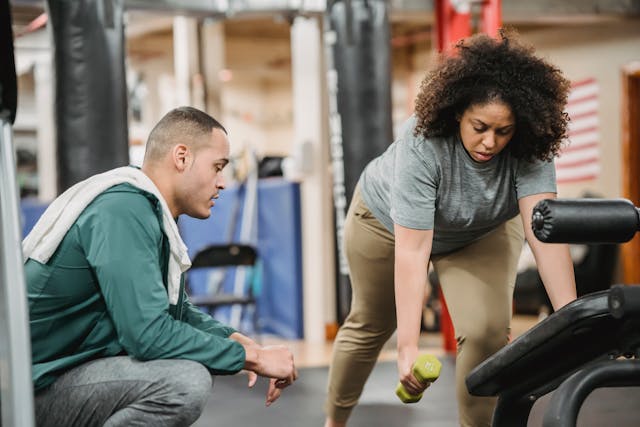
How many times have you been in the gym and thought to yourself that you could do this for a living? That you want to somehow make your love of fitness an actual career, and turn it into something you do in your space because you enjoy it?
You’re not alone, and the fitness sector, as of 2024, was valued at $40.6 billion, making it a thriving industry. But did you know there’s more than one way to make a career within the fitness or health and wellness sphere? It’s not just about becoming a personal trainer, though this is a valid option if you love it and genuinely want to help people train.
Let’s take a look at some other ways you can use your love for fitness to carve out a pretty great career.
Pilates Instructor
Along the same lines as a personal trainer, a pilates instructor teaches people proper movement execution to improve overall fitness, mobility, posture, and well-being. It’s about more than stretching; it’s training plans that guide people through the art of Pilates to gain maximum benefits for their bodies.
Typically, to complete your training, you’ll need to earn a comprehensive certification that covers anatomy and movement and requires 400 to 600 supervised teaching hours.
It’s not all theory; it’s practical training in how to help people, not just in perfecting your own movements and knowledge. Pilates instructor training usually takes around 12-18 months, depending on the course you choose and how much time you dedicate to completing it.
Corrective Exercise Specialist
What exactly is a corrective exercise specialist? They are trainers who work with people who are limited by pain, injury history, or movement issues. They might be recovering from an accident or illness and need help progressing or rebuilding their foundations.
Usually, they don’t come as fully trained athletes, and it’s more of a rehab space than a personal turning space. But to train in this area, you’ll usually start with a personal training background and then add on a corrective exercise certification. Your training will primarily be focused on movement assessments, posture, and identifying where things break down, i.e., why someone’s knee collapses during squats or why their back tightens under load.
This is ideal for people who want to help others work through specific issues; it’s not training for strength, it’s about regaining functionality. And training can take around a year, and you’ll need to satisfy entry requirements for your course to advance, which could mean you need to gain other qualifications before being accepted.
Physiotherapist
Becoming a physiotherapist is a more structured and regulated process here. In the US, you need to obtain a Doctor of Physical Therapy degree by passing a licensing exam. To pass this exam, you’ll likely undergo years of heavy clinical training. You’ll learn how to assess patients, diagnose, plan treatment, and develop hands-on techniques, not just gain expertise in programming. From here, once you qualify, you will work with a range of patients, including post-surgery patients, chronic conditions, and injuries in patients from really young children through to the elderly.
You can gain your qualifications, you can hone in on a niche, but that’s entirely up to you, i.e.,e working with people who have lost a limb, or you can move into sports physiotherapy exclusively. But this is the perfect career for those who want a slightly different career while still being involved in the mechanics of supporting a healthy body.