Somewhere along the way, a strange rule started floating around: eating after a certain time is “bad.” After 7 p.m. is risky. After 8 p.m. is worse. And after 9? Forget it—might as well have ruined the day. Plenty of people live by this idea, shutting the kitchen down at night even when they’re hungry, all because they were told food has a curfew.
The truth is, the body doesn’t own a clock that suddenly flips into fat-storage mode when the sun goes down. Hunger doesn’t care what time it is. If someone worked late, trained in the evening, or simply didn’t eat enough earlier in the day, their body might ask for food at night. That isn’t a lack of discipline—it’s biology doing its job.
This belief usually comes from a mix of diet culture and oversimplified advice. Telling people “don’t eat after X time” feels easy and clean, but it ignores context. What actually matters is how much someone eats overall, what they’re eating, and how consistently they fuel themselves. A balanced meal at 9 p.m. doesn’t magically undo a day of good habits.
Where nighttime eating gets a bad reputation is when it becomes mindless. Snacking straight from the bag, eating out of boredom, or using food as a way to decompress after a stressful day can add up—not because it’s late, but because it’s disconnected from hunger. The problem isn’t the clock. It’s the autopilot.
Sleep often gets dragged into the conversation, too. Eating a heavy, uncomfortable meal right before bed can disrupt sleep, and poor sleep affects appetite and energy the next day. But that doesn’t mean all food at night is off-limits. A protein-rich snack, something light and satisfying, or a proper dinner after an evening workout can actually help recovery and sleep quality.
For many people, food curfews backfire. Ignoring hunger can lead to obsessing over food, overeating the next day, or swinging between restriction and bingeing. When someone tells themselves they’re “not allowed” to eat, the desire usually gets louder, not quieter.
A better approach is learning to trust hunger cues instead of arbitrary rules. If someone is genuinely hungry at night, eating something balanced is often the most supportive choice. If they’re not hungry but just bored or stressed, addressing that need directly may feel better than forcing food to fill the gap.
Food doesn’t turn into something dangerous after dark. It doesn’t suddenly lose its nutrients or gain moral value. Bodies don’t reset at midnight. They respond to patterns, consistency, and care over time.
So the real question isn’t “What time is it?” It’s “What does the body need right now?” Once that question replaces the curfew mentality, eating becomes less stressful, more intuitive, and a lot more human.
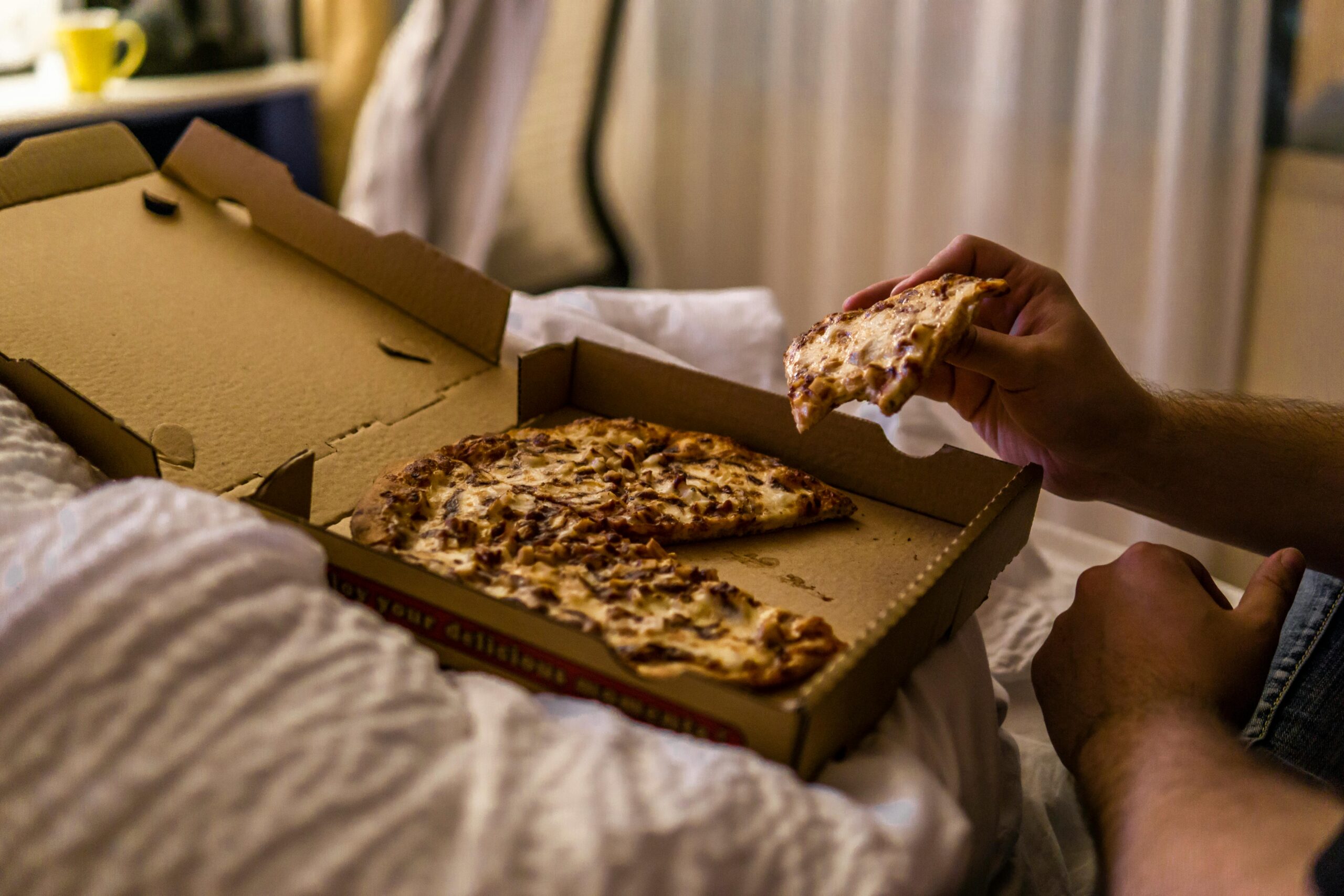
Photo by Sarah Dietz: https://www.pexels.com/photo/faceless-man-enjoying-delicious-pizza-lying-in-bed-at-home-423493