It’s all too common for someone to mention cheerleading, and the image that pops into mind is a mere sideline support role. If you’ve ever seen competitive cheerleading, you know that stereotype couldn’t be further from the truth. It’s time that competitive cheerleaders are recognised for the dedicated athletes they are.
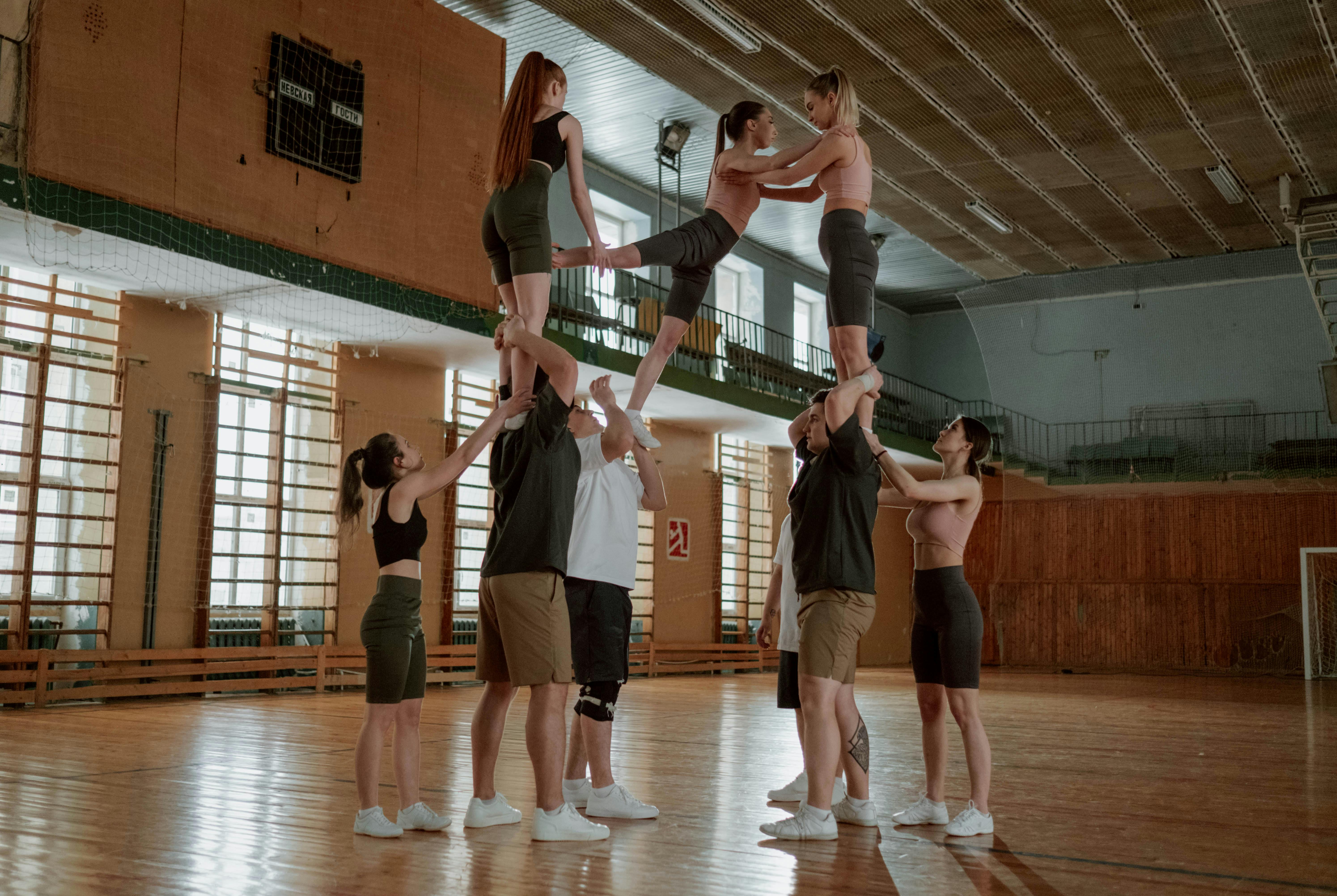
Competitive cheerleading today is a demanding activity requiring full-body athletic abilities. Cheerleaders must perform complex skills like tumbling, jumping, stunting, and dancing at an elite level. The physical requirements include strength, power, cardiovascular fitness, flexibility, coordination, and balance. One study comparing cheerleading training to traditional physical education found that cheerleading led to a more prominent advancement in motor abilities, with statistically significant improvements in speed, endurance, balance, flexibility, and strength for participants. Competitive cheerleading’s athletic demands are similar to other aesthetic sports (ie, “sports in which scoring depends on subjective evaluation of skill competency and presentation”)like gymnastics, ballet, swimming, diving, and figure skating.
Like other athletes, cheerleaders face significant risks of injury, including fractures and concussions, which are found to be more common than in many other sports. It is worth mentioning that cheerleading isn’t just a seasonal hobby; competitive cheerleading is often a year-round activity requiring significant time commitments. This is shown by cheerleaders in one study who had an average of 4.4 years of competitive cheerleading experience and practiced about 7.6 hours per week, not including additional coaching hours.
You may not consider this when thinking of cheerleading, but cheerleaders, like females in other aesthetic sports, face intense psychological demands related to their image and performance. These athletes can be at risk for eating disorders (EDs), and body image dissatisfaction (BID) due to the pressure to maintain a small size. Studies have found increased rates of ED risk among cheerleaders, with one study reporting over one-third of their sample being at risk. These psychological pressures are similar to those found in other aesthetic sports previously mentioned.
The perception of cheerleading is slowly changing from a sideline activity to a sport, but misconceptions still exist. It’s safe to say that all athletes hope people see their commitment and athleticism as they watch the sport. Competitive cheerleaders are elite athletes who train intensely, have a range of physical skills, and handle both the physical and psychological pressures similar to those in other recognized sports. They deserve to be seen and respected as true athletes.